
The Merriam-Webster definition of an athlete is:
‘A person who is trained or skilled in exercises, sports, or games requiring physical strength, agility, or stamina’
But over the last few years, more and more professional video game players are being labeled with the term athlete.
The latest move in the shift of definition to also cater for pro-gamers was the United States’ decision this year to start granting visas to gamers visiting the country to train and play in tournaments. The visa in question is the same one professional sports players are granted when visiting or living in the US under the same circumstances.
With over £5m in prizes handed out so far in League Of Legends play this year and another million or so to the season winner, the US government decided that the championships series ‘had reached a level of competition that warranted the same legal considerations that are applied to other sports like the NBA or Major League Soccer.’
But how do you draw the line between obsessive and addictive behaviour and a drive to be the best in the world, on a level with Olympians and other pro track and field stars? Would you ever argue that David Beckham has an unhealthy addiction to football or that Michael Phelps needs to cut down on his swimming?
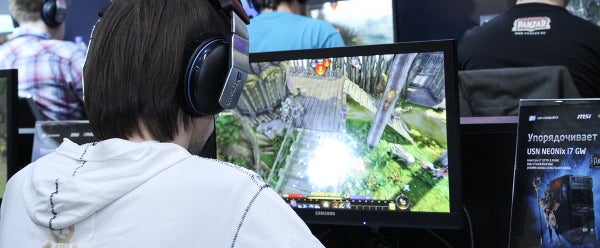
Pro-gamers competing in eSports mght not have the physical discipline on a par with that of their traditional sporting counterparts, but some argue that on a mental level, the training and hard work put in is the same.

Tournament stage at Intel Extreme Masters 2013 – Electronic Sports World Cup on January 20, 2013 in Katowice, Silesia, Poland.
Patrik Sättermon, a retired pro-gamer and chief gaming officer at team Fnatic, told CBR:
"I definitely consider ourselves as athletes as in any other conventional sport.
"To be successful in esports you have to put in endless of practice to reach the top, and on top of that you will have to have the mindset of a winner which means not losing composure under pressure, as well as respecting the game and the opponent."
Professional gaming (or esports) is a fast growing industry that ever attracting increasingly premium corporate sponsors, huge crowds and giant monetary prizes.
Organisations like The Tournament and World Cyber Games hold competitions where teams from all over the world attend, clocking up millions of views online which are starting to rival that of some major sporting matches like Football or Rugby.
This years Tournament 3 was held in a prestigious concert hall in Seattle, and the Swedish Team ‘Alliance’ won a prize of $1.43m. Now that’s not even starting to get close to the prizes in major sporting championships, but it’s still a lot of money, especially considering that esports has only really been getting going for around a decade or so now.
Multiplay, a UK gaming company who run industry and player events, spoke to CBR about the move by the US government regarding visas:
"Multiplay support movements like this within esports because it benefits everyone in the industry from the shared promotion and recognition of gaming as a legitimate medium for sport.
"We believe that professional competitive gamers are athletes, who deserve all the legal rights athletes in traditional sports have.
"Decisions like this visa classification, and massive events like The International make us all very happy, as it points towards a maturing of the medium, and helps pave the way to wider recognition and acceptance which benefits everyone involved from competitive players to spectators to sponsors to developers to organisers like ourselves.
"We’ve been organising esports tournaments for almost two decades, and watched esports grow from more humble beginnings into the huge globe-spanning phenomenon that it’s become today.
"From our position, based on current progression, the future of esports looks bigger, better, and brighter every day.
"Being a part of that growth has been a phenomenal experience, and we’re not done yet. At our upcoming event Insomnia49 we have several tournaments arranged, for all the major competitive games of the moment, with large prize pools and great communities."
In South Korea, Starcraft II has become known as the country’s national past time. This year, a stadium filled up with 20,000 spectators for live coverage of matches. To put that into perspective, that’s almost double the capacity of Wembley arena!
Craig ‘Wizzo’ Fletcher, the CEO and founder of Southampton-based Multiplay, told CBR:
"If sports such as darts and pool can be considered professional sports in terms of visas, professional-level competitive gaming and esports should similarly be considered.
"There’s no less skill involved, and an equal level of dedication, of physical and mental training under intense pressure, of the skills involved and the level of team or solo play.
"The only difference is that you don’t run around a physical pitch, you run around the virtual one: The systems of input are different, that’s all.
"This legal change is a natural progression for esports; In our view, we see a future where esports are considered alongside other test sports at, say, an Olympic level."
Over the past few years, there has been a tangible shift as to how sponsors and sporting mediums are reacting to the growing audience in esports. With brands such as Monster and Red Bull all supporting pro-gamers, TV channels are also catering to esports. Many countries already report on gaming stories alongside the football or soccer matches.
Video game tournaments have been held since the ’80s, but with the current growth rate then we will surely see this avenue of sports become a massive player in the world of entertainment. It also offers a career path to those who would perhaps be excluded from competitive sports through gender or physical inability.
"What I think is particularly good about esports," says Patrik Sättermon, "is that it’s the only thing out there where you can compete against anyone. It’s cross gender, cross nation. You can be a disabled person but you can still compete. It activates everybody, it is for everyone."